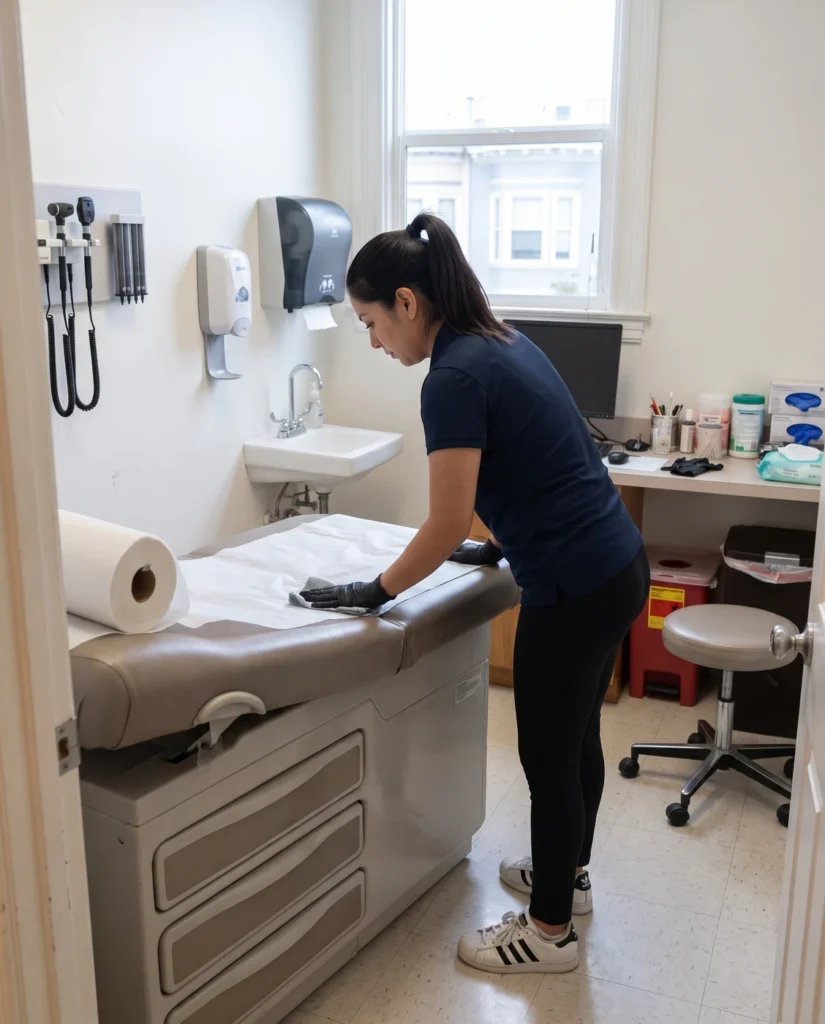
Waiting rooms, exam rooms, and restrooms in a healthcare office get used all day, and patients notice when those rooms are clean. A written medical office cleaning checklist keeps that standard steady and tells your crew which surfaces are part of their job.
For more than 25 years, we have cleaned medical and dental practices across San Francisco. According to CDC facility cleaning guidance, regular cleaning helps prevent the spread of germs that make people sick. Use this list to brief a new medical office cleaning service or to check what your current one covers.
Who Cleans What in a Medical Office
Infection control guidance from the CDC for dental settings separates clinical contact surfaces from housekeeping surfaces. Clinical contact surfaces near the patient should ideally be barrier protected, and your clinical team changes those covers between appointments. Floors, walls, and sinks are housekeeping surfaces, which a crew can clean before opening or after the last appointment.
Under OSHA’s bloodborne pathogens standard, employers covered by the rule must keep the worksite clean and sanitary. They also need a written cleaning schedule based on location, type of surface, and tasks performed. Your checklist for a cleaning company should match that written schedule.
The Medical Office Cleaning Checklist
Waiting Room and Reception
- Wipe the check-in counter, door handles, light switches, and chair arms and seats.
- Dust side tables, ledges, and other accessible surfaces.
- Clean glass entry doors and the reception window.
- Vacuum carpets and mats, then sweep and mop hard floors.
- Empty trash bins and replace the liners.
Exam and Treatment Rooms
- Clean sinks and faucets.
- Wipe door handles, light switches, and the counters staff have cleared.
- Sweep and mop the floor.
- Empty regular trash bins.
Sharps containers and other regulated medical waste follow different rules. OSHA requires contaminated sharps to go into closable, puncture-resistant, leakproof containers that are labeled or color-coded. Agree in writing on which bins the crew empties.
Patient and Staff Restrooms
- Clean and disinfect toilets.
- Wash sinks, faucets, countertops, and mirrors.
- Refill soap, paper towels, and toilet paper when restocking is part of the plan.
- Sweep and mop the floor, then empty waste bins.
Private Offices, Workstations, and Break Rooms
- Dust and wipe accessible desks and furniture.
- Clean break room counters, tables, the sink, and appliance exteriors.
- Vacuum carpets, mop hard floors, and empty trash and recycling bins.
Dental Office Cleaning Additions
Dental office cleaning adds one area: the operatory. The CDC lists light handles, bracket trays, dental unit switches, and computer equipment as clinical contact surfaces, so they stay with your chairside team. A cleaning crew sweeps and mops the operatory floor, cleans the sink, and wipes walls and cabinet fronts that are clear. Decide early whether the crew enters the sterilization area.
Building a Schedule Around Patient Hours
Housekeeping surfaces need regular cleaning and removal of soil and dust, according to the CDC’s environmental services guideline. It says high-touch surfaces need cleaning or disinfecting more often than surfaces with minimal hand contact. In a clinic, those include the check-in counter, door handles, restroom fixtures, and waiting room chairs, so they go on every visit. Vents and high ledges can follow a monthly rotation or wait for a periodic deep cleaning. Our cleaning plans follow your appointment hours, with one-time or recurring service.
How to Limit Cross-Contamination from Cloths and Mops
Cleaning cloths and mop heads can spread contamination, especially when they sit in dirty solution, the same CDC guideline notes. It recommends laundering and drying them before reuse, swapping in clean ones each time a bucket is emptied, or using disposables. Ask any crew you interview how it handles both between rooms.
Sharing Your Checklist with a Cleaning Company
Hand your written schedule and any cleaning protocols your practice follows to each company you talk to. Then walk the space together so the crew sees its rooms and bins.
Tell the company about any product preferences before service begins. Our team brings its own supplies and can plan around the products your office prefers. Maintaining your facility can also mean periodic carpet cleaning for waiting rooms or floor buffing for hard floors. See every clinic service on our medical and dental office cleaning page.
Frequently Asked Questions
Is Medical Office Cleaning Different from Janitorial Services?
Medical office cleaning is a janitorial service planned around patient hours. The crew handles housekeeping surfaces and shared spaces, while your clinical team keeps the chairside and barrier work.
Is a Long-Term Contract Required?
Standard cleaning services come with no long-term annual commitment at Cleanerific.
Request a medical office cleaning quote, and our team will reach out with next steps. You can also call (415) 820-7230 to schedule a walkthrough of your clinic.